
It’s taken me a close on a lifetime to appreciate the Aboriginal people of the land I call home – the First Nation People. Childhood history lessons were Captain Cook centered and I can’t recall any story books that focused on Australia’s first people.
By age twenty one I was a finally professed nun and a certificated primary school teacher, anticipating an appointment to a suburban school. Instead, I was told to exchange my black nun’s habit for a set of much lighter white garments, had my first plane trip and ended up in Darwin, where I boarded a smaller plane which slid to a bumpy stop in the middle of – space – lots of space, and a waiting ute. This was Port Keats, an Aboriginal mission station and I was the new teacher.
Places that move us, touch a cord deep inside, can tell us a lot about who we are. In my early childhood I absorbed a memory of my grandparent’s Mallee landscape – flat and nearly featureless. It probably explained why the minute I touched down on the Port Keats runway, its faded colours, the stillness, the space, I felt that it was a place where I belonged.
At the time most missions, Catholic and otherwise, had dormitories where children were placed after being separated from their families so the children I taught had little opportunity to become familiar with their language and rituals, art and body painting.
My ignorance was appalling. Apart from the few sketchy segments included in my two years of teacher training, if the history and richness of Australia’s indigenous communities was ever mentioned, I missed hearing it.
For the next fourteen years, in one way or another, I did what was expected of me: teaching English and basic mathematics, introducing European classical music and Catholic doctrine and practices, supervising the girl’s dormitory. In all that time I don’t recall hearing a single traditional story and neither did I attend a traditional Aboriginal corroboree.
I never knew what I was missing, but I knew something wasn’t sitting right with me. So I left both the Northern Territory and religious life and began all over again.
Over the many years that have followed, people have assumed that I must be deeply involved in Aboriginal initiatives such as health, social justice and the Yes campaign. But the way my NT years are reflected in my life is much more subtle.
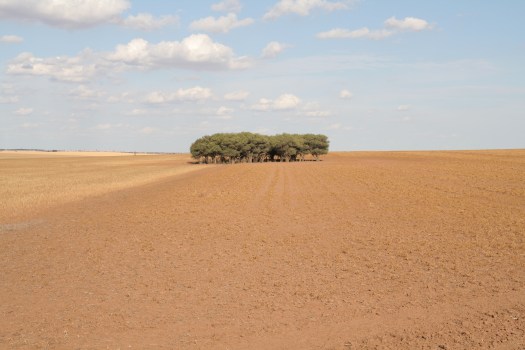
God has written a story across this land, a story whose story lines the first people of this brown land have sung for thousands of years. My years in Port Keats (now renamed Wadye), Bathurst Island, Daly River and Santa Teresa were like a book, whose pages have taken me many years to read. Australia’s wide-open landscape has given me an enormous sense of belonging.
Reading First Nation authors as well as Listening to them speak about their relationship with the land has not only helped me reach an appreciation of how they understand this land I call home, but it freed something unspoken in me, about who I am and where I have come from.
In an article published in 1988 Eugene Stockton said: “If I was born in this land, by Aboriginal belief I have pre-existed here like them from the timeless Dreaming. So, on their reckoning, I have with them a common bond and common spiritual roots in this continent, although racial roots through my parents, lie elsewhere.”
As Pope John Paul said when he visited Alice Springs in 1968: “What a gift Aboriginal spirituality of the land is to all who seek to know God better. “
Judith Judith@judithscully.com.au
Liked this? Why not pass it on to a friend.

 Words From The Edge