
There’s something welcoming about round tables. As Charles Lathrop says in his poem Round Tables, “. . . no preferred seating, no first or last, no better, no corners . . . “ If I was hosting a Mother’s Day lunch I’d have a round table and set it for eight. I’d use my very best china, the setting that usually lives on the bottom shelf of the sideboard, and the tinkly, stemmed, wine glasses, a wedding present all those years ago. I’d polish the heirloom silver cutlery.
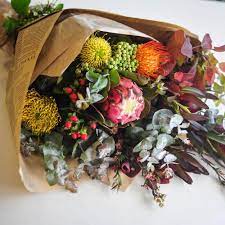
If I was hosting a Mother’s day lunch at a table for eight, these would be my guests.
My mum. She was one of ten children, christened Gertrude Minnie but eventually known as Pat! A country girl, she married a city boy and I was her first child and only daughter. I never got to know her very well, probably because in my mid- teens I joined a religious order and missed out those years when we could have moved into a different kind of relationship, more familiar. We never quite got to that point and as the years have passed I’ve come to regret that.
Then there’s Martha. You may remember her as Lazarus and Mary’s sister. Jesus summed her up when he said, “Martha, Martha, you worry about many things”. Me too! Did you mutter under your breath, “Well, someone has to.” Martha and I have a chat when I feel overwhelmed.
Mary McKillop – now there’s another woman I’d be honoured to have at my table, and not just because my family has links to her birthplace, Fitzroy. God gifted her with a dream, a vision for a young country, and it lives on today in her Sisters. Maybe we could talk about her vision for the Church of tomorrow.
Because my name is Judith, religious curiosity led me to the Bible where the book of Judith is sandwiched between Tobit and Esther. It has all the elements of a pot boiler – sex, murder, violence and lies, a cruel and ruthless villain and a brave, beautiful, prayerful and wise heroine. What a time she lived in and what a story she has to tell.
Maria Scully was my great grandmother and her picture hangs on the wall outside my writing room. She looks rather stern and sometimes I wonder what she was really like, how life was for her. I know she was born in Ireland, married Joseph Scully in Tasmania in 1855 and gave birth to 10 children, but little more. I’d like to thank her for being one of Australia’s unsung pioneer women. And as she once lived in Fitzroy I’m sure she and Mary McKillop will have something to talk about too.
Mother Columcille was my novice mistress and a big influence on my early adult life when I was way too young to be making life choices. She nurtured my spirituality with what I now see was unusual sensitivity and she was supportive eighteen years later when I swapped my religious habit for something more fashionable. I like to think that Sister Frances, as she was called in later years, would get on well with my mother.
My last guest is Teresa of Avila- Spanish, born in 1515,a Carmelite nun, a saint, a Doctor of the Church and – a writer. Teresa has a way with words and I’d like to get her talking about the ups and downs of putting them on paper, especially when the Church hierarchy of the time considered men had a monopoly on religious words. She would be such an energising and encouraging presence at my table.
It won’t happen of course, it can’t.
But Mother’s Day can be a reminder that we come from a long line of women. A sacred thread connects their story to ours – their stories of love and pain, their creativity, their recipes, the words or phrases they spoke, their wisdom and maybe the mistakes they made unknowingly echo though our lives. We owe them a lot.
Judith judith@judithscully.com.au
 Words From The Edge