Sunflower

Once upon a time, as the calendar moved slowly into the week before Easter, I knew what to expect. Holy Week, seven days commencing with Palms on the Sunday and punctuated by Holy Thursday, Good Friday and Holy Saturday or Easter Vigil, coming to a climax in a week of chocolately Easter alleluias. That was then.

Once upon a later time I was involved in planning Holy Week parish liturgical celebrations. They sit there in my memory – words, music and actions, creative, well-planned, occasionally lop-sided, stretching to link Jesus’ death and resurrection, traditional practices, do-not-meddle-with liturgical rubrics and reality. But within a few years diocesan guidelines had faded anything so innovative into nothing.  

Those years of faithful liturgical celebration had changed me. Where I had once equated religious faith with fidelity to liturgical practices, now the Gospel story of Jesus’ last days culminating in the joyful but hard-to-believe resurrection, had gradually woven its way into my everyday. And what an everyday 2022 has been so far!

The first Holy Week was set in world where betrayal, abandonment, mockery, violence and ultimately death changed the course of history. This year, across the world, people have experienced that and more. Many millions suddenly and unexpectedly are losing so much, if not everything.

Maybe personally, but mostly via endless social media bulletins and updates, our carefree, safe lives have been infiltrated by the on-going-ness of Covid, devastating floods, the terror and brutality of Russia’s bid to control Ukraine and now the tiring speechmaking that is the current face of Australian politicking in the lead-up to an election.

It’s a liminal space, a Holy Saturday space. We are called to live it with compassion as we sit and stand and live out our lives in solidarity with those who are living in grief for what has been lost, before moving into hope for the future. Without security they are living on the edge.

I think being open to the gap that exists between the religious traditions of my baptismal faith and life as it opens out in front of me, is what living on the edge means to me. Living on the edge has given me the space to recognise and to depth the Holy Week story as it unfolds, not just across one week, but 24/7. It means too, that I’ve experienced the security of some faith beliefs being washed away like a low-lying house in the recent Queensland floods. It’s gone, and all one holds dear has gone with it.  Like that first Easter week and as the Apostles found out for themselves, it’s not easy to recognise the resurrected Jesus when your eyes are on the crucified Jesus.  

There will  be no Easter eggs tucked away behind the rocky outcrops and  skinny gum trees around our house this Sunday, thanks to a family seven day Covid lockdown, but there are sunflowers in a vase. Those flowers are my prayer for peace in war ravaged Ukraine.

I wish you a balanced Easter, sprinkled with gratitude for the gifts that come wrapped with God’s name on the accompanying card.

Judith                        judith@judithscully.com.au
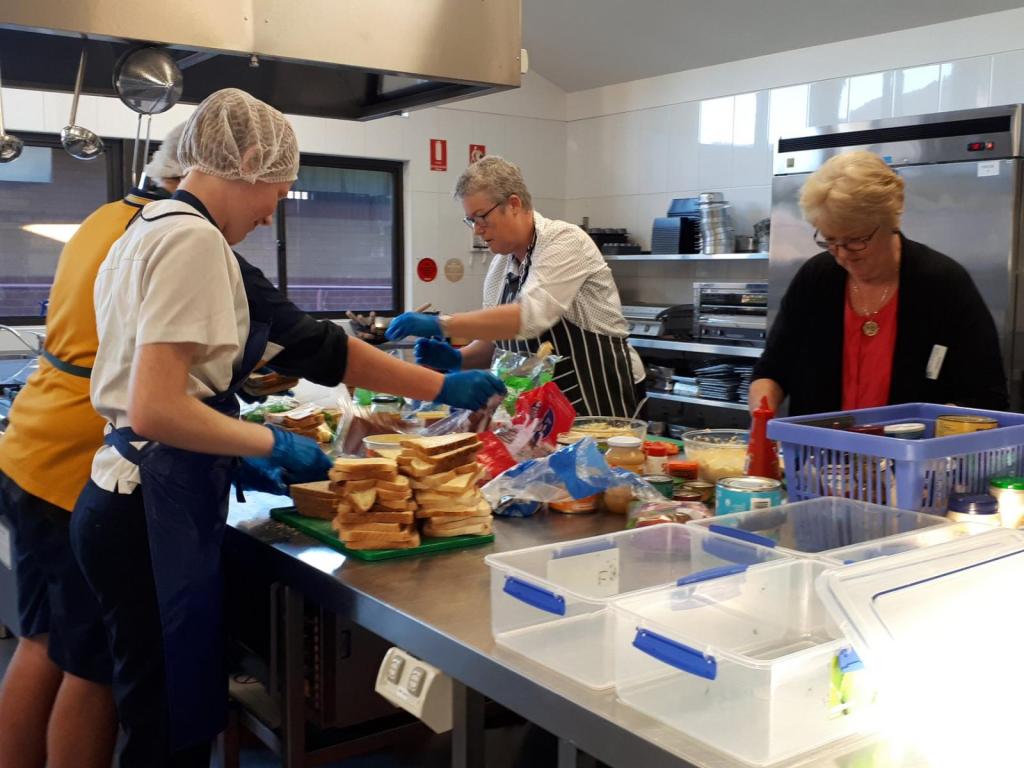
Putting on an apron

There’s a very ancient way of reflecting on a passage from Scripture that is called Lectio Divina or sacred reading. You read the passage slowly, until you come to a word or phrase that sticks in your mind or prods your imagination and says, ‘Stop, stay with me for a while’.

Well, I was reading Luke chapter 12 and I got as far as verse 37. You might remember it, a sentence about the master, arriving home way past his servants’ normal bedtimes, coming in and being so pleased to see that they were expecting him that that he put on an apron and served them all a late night supper.

 Now there are probably deep theological insights to be gained from a prayerful and studious reading of the whole of this passage from Luke’s Gospel, but the apron got me. Here’s a macho Jewish man of means putting on an apron and proceeding to wait on his servants.

The image of the apron recalled another passage, the one that tells of Jesus removing his outer garment, wrapping a towel around his waist and proceeding to wash the feet of all gathered around the Passover table. The master is also the servant.

And I wonder what happened to that beautiful model of service in the years between then and now. It seems that gradually Jesus’ action just lingered as words on a page, resurrected symbolically on Holy Thursday every year. Meanwhile the titles, housing, clothing and lifestyle of worldly leaders became the norm for Church leaders.

Vinnie Van

I once heard a priest suggest that parents changing a baby’s nappy a dozen times in a day might be seen as a twenty first century washing of the feet, or put another way, the master waiting on the one assumed to be inferior.

So many ordinary women and men, wrap symbolic aprons or towels around their middle and serve others in the name and spirit of Jesus – a carer massaging skin cream into the stiff fingers and dry skin of an elderly patient, a hairdresser volunteering time and skill to shampoo and blow-dry the thin hair of a dozen nursing home residents, Day after day, Polish men and women preparing thousands of meals for Ukrainians fleeing the Russian army.

We call our Church leadership the hierarchy; there’s a top and a bottom and lots of stages in between. The trouble with this model is that we have used it to opt out of our Baptismal call to be both foot washer and the one whose feet are washed.

Sometimes I think it’s our own fault that our Church hierarchy has by and large tumbled off its collective pedestals. After all, we put them there when we didn’t insist and expect that they be accountable to the communities they served. There are times when we excuse our clergy instead of reminding them of our expectations that they journey side by side with us.   

It saddens and angers me when I hear about Church communities who have been sidelined by a priest leader who has no respect for the needs and gifts of the people he serves. Then I want to know why we let this happen. What if instead of letting our priests and bishops behave like (some) big businesses, we let them know that we need them to respect us as we respect them.

We are the Church. What if we meant it?

Judith judith@judithscully.com.au