It’s in the Book

My Bible is looking very battered, its binding held together with wide pieces of clear sticky tape. It’s a Jerusalem Bible, an English translation of a French translation from the original Hebrew and Greek texts, printed in 1966. It’s big, it’s heavy, the pages are wafer thin, unmarked by pencil or highlighter, unlike just about every other book I own.

I can’t claim to have read every word of it – there are whole chapters that remain unread, especially in the Old Testament. My most frequently pondered chapters are from the New Testament, the Jesus story as it is told from the perspective of Matthew, Mark, Luke and John. Lately however, my Bible has sat, unopened for weeks at a time.

Maybe familiarity has dulled my reading of the Gospels. Maybe I’ve stopped seeing Jesus from the perspective of a first century Christian, when the choice to follow his teachings was an adult thing, a deliberate choice that took courage, determination and a strong will to join what was essentially a fringe movement – exciting but demanding. Maybe I’ve stopped seeing Jesus from my place in the twenty first century.

A couple of weeks ago Kevin Donnelly, writing  in the Australian, said this; “It’s a hard time to be a Christian, especially a Catholic”. I agree. It takes courage to go against the tide of unquestioned beliefs, family customs, public opinion and established religious tradition in order to speak about anything, but especially religious issues. Mentioning Jesus can be embarrassing. Maybe it’s time for me to return to the Gospels, to see life, as it’s happening right now, through the eyes of Jesus.  
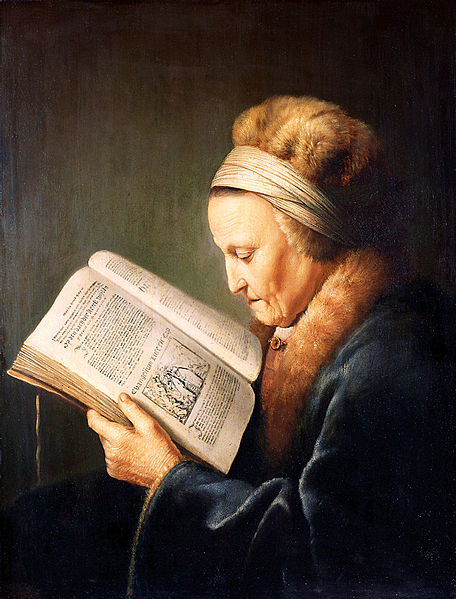
The Jesus story is the thread that holds Christian communities together. It’s what makes Christianity a living and still evolving religion. Aside from a token nod to Jesus’ birth and death each Christmas and Easter however, you will hear almost nothing about Jesus unless you are a regular church goer. Christian churches introduce us to a Jesus we can imitate in twenty first century ways, someone who sets the bar for what it means to be fully human. External rituals and compliance with rules rarely do that.

 Christianity today does the ‘big stuff’’ really well. Regardless of race, culture or gender, Christianity gives people a practical way to integrate their inner spirituality with the day to day The sick, the needy, the homeless, families displaced by war, the disabled and the mentally ill are cared for by any number of organizations and volunteers. Are a whole lot of empty churches for sale because people no longer see any point in remaining faithful to what is essentially cultural Christianity?

 A slow, careful reading of a Gospel passage gives the details a chance to be noticed and Jesus’ voice to be heard, maybe stirring a recognition of something that is currently happening. A word or phrase that catches our interest or imagination.is like a hook the Spirit uses to bring something to our attention. We just need the courage to believe it, to stay with it, to live it.

Judith (judith@judithscully.com.au)
An edgy question

Will my religion matter when I die? This is a question I’m asking myself now I have faced the fact that there’s a lot more time behind me than ahead and heartened by the couple of generations of laity behind me who are taking an active part in the Australian Plenary Council.

 I’ve been a Catholic since I was thirty two days old. My religion, like my family name was passed down to me by my parents. Following a centuries-old catholic tradition they took me to Saint Patrick’s cathedral where prayers were said, a priest poured water over my unsuspecting head of black hair, mum and dad promised to bring me up as a good Catholic and, for better or worse, I too was now a catholic. I have a certificate to prove it.

I was in my thirties before I began to question the rules, restrictions and outdated practices that bound me into my religion. I couldn’t understand why theology was the province of the clergy and practices such as contemplative prayer belonged in monasteries and convents. I began exploring my Catholic spirituality, a spirituality that seemed to have been swallowed up into words and pious practices promulgated by an overwhelmingly male leadership.

Religion without spirituality ends up being a long list of do’s and don’ts focused on areas where order and control are achievable– like finance, clothing, buildings, roles, offices and regulations that hide behind “this is the way we have always done it “. As outspoken catholic priest Fr Bob Maguire said, “Religion will kill you on its own. Spirituality on its own will lead you up the garden path. You’ve got to have them together.”

Many people in my age group no longer trust, or even want answers from religious leadership. We’re the women and men who for a few years in the 1990s thought that the Church of our Baptism was listening to the way we lived our faith and our yearning for a relevant spirituality. We began to experience what it felt like to belong to a vibrant community, before the heavy hand of Rome stepped in. Church went back to them and us. The sexual abuse scandals surfaced at much the same time and the damage that did will take a long time to heal. It may never have happened if religious leadership in the Catholic Church had been open to women.

Not long ago I stood in the little side chapel where I had been baptised and wondered how and why that long-ago day has marked my life. I have been tempted to experiment with another brand of Christianity, one with better music or a more open approach to divorced people, a church that welcomes a woman as priest or pastor or minister, a church where a women’s viewpoint is respected and their skills appreciated.

Somehow I always return to the basic fact that my way to God, my spirituality, is to be found in the Catholic tradition – but I’ve given myself permission to colour outside the lines. I’ve had to unlearn a great deal about religion, catholicity in particular, and discovered insights that were new to me. And I’ve come to appreciate that all religions have a common goal: to reveal God’s presence in all of us. For now, that might just be the answer to my question.

Judith (judith@judithscully.com.au)