When Australia is home

It’s taken me a close on a lifetime to appreciate the Aboriginal people of the land I call home – the First Nation People. Childhood history lessons were Captain Cook centered and I can’t recall any story books that focused on Australia’s first people.

By age twenty one I was a finally professed nun and a certificated primary school teacher, anticipating an appointment to a suburban school. Instead, I was told to exchange my black nun’s habit for a set of much lighter white garments, had my first plane trip and ended up in Darwin, where I boarded a smaller plane which slid to a bumpy stop in the middle of – space – lots of space, and a waiting ute.  This was Port Keats, an Aboriginal mission station and I was the new teacher.

Places that move us, touch a cord deep inside, can tell us a lot about who we are. In my early childhood I absorbed a memory of my grandparent’s Mallee landscape – flat and nearly featureless. It probably explained why the minute I touched down on the Port Keats runway, its faded colours, the stillness, the space, I felt that it was a place where I belonged.  

At the time most missions, Catholic and otherwise, had dormitories where children were placed after being separated from their families so the children I taught had little opportunity to become familiar with their language and rituals, art and body painting.

My ignorance was appalling. Apart from the few sketchy segments included in my two years of teacher training, if the history and richness of Australia’s indigenous communities was ever mentioned, I missed hearing it.

For the next fourteen years, in one way or another, I did what was expected of me: teaching English and basic mathematics, introducing European classical music and Catholic doctrine and practices, supervising the girl’s dormitory. In all that time I don’t recall hearing a single traditional story and neither did I attend a traditional Aboriginal corroboree.

I never knew what I was missing, but I knew something wasn’t sitting right with me. So I left both the Northern Territory and religious life and began all over again.  

Over the many years that have followed, people have assumed that I must be deeply involved in Aboriginal initiatives such as health, social justice and the Yes campaign. But the way my NT years are reflected in my life is much more subtle.
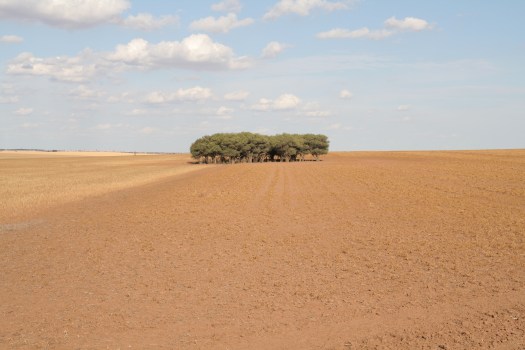
God has written a story across this land, a story whose story lines the first people of this brown land have sung for thousands of years. My years in Port Keats (now renamed Wadye), Bathurst Island, Daly River and Santa Teresa were like a book, whose pages have taken me many years to read. Australia’s wide-open landscape has given me an enormous sense of belonging.

Reading First Nation authors as well as Listening to them speak about their relationship  with the land has not only helped me reach an appreciation of how they understand this land I call home, but it freed something unspoken in me, about who I am and where I have come from.

 In an article published in 1988 Eugene Stockton said: “If I was born in this land, by Aboriginal belief I have pre-existed here like them from the timeless Dreaming. So, on their reckoning, I have with them a common bond and common spiritual roots in this continent, although racial roots through my parents, lie elsewhere.”

As Pope John Paul said when he visited Alice Springs in 1968: “What a gift Aboriginal spirituality of the land is to all who seek to know God better. “

Judith Judith@judithscully.com.au

Liked this? Why not pass it on to a friend.

One Friday night

Last Friday night my youngest grandson, Harry, was confirmed.

One Sunday morning eleven years ago, a priest had swirled water in a large clear glass bowl and poured a scoop of it over Harry’s head with the words. “I baptise you Harry, in the name of the Father and of the Son and of the Holy Spirit.” Now, in what seemed to be no time at all, Harry had been invited to confirm that Baptism.  

In the outer Melbourne suburb where he lives there is no stand-alone church but a very large catholic primary school. Its assembly hall had been set out with hundreds of chairs occupied by parents, siblings, grandparents and assorted family and friends, greeting each other and chattering in a mixture of languages. As I looked around to identify my family seat the breath caught in my throat. The place felt so – alive!

Flowers and twinkling lights marked a table set with silver cups and the Mass book. The hubbub gradually died away as the Bishop and two accompanying priests moved to the table and the girls and boys, accompanied by their sponsors, processed into the seating set apart for them. For the next hour it would not be the Stella Maris school assembly hall, but a sacred space.

I would love to say that the aliveness I initially experienced stayed with me through the rest of the Confirmation. Instead it gradually drifted away. That might have been because we were solemnly told that as this was now a sacred space, phones were to be turned off and a prayerful silence observed, especially during the reception of communion – but an assurance that the Bishop would be available for photos at the conclusion of the ceremony.

As a catechist I’ve been to quite a few Confirmation ceremonies and occasionally I recall the words of an experienced parish priest standing behind the line of Confirmation candidates as they waited in line to process into the church. “Look at them”, he said, “ just kids still. I’m in heading for my 50s and I still don’t think I’m ready to be confirmed.”

The Australian Catholic Church, or possibly the whole church, puts a lot of emphasis onto educating primary school aged children in faith – hoping, maybe assuming- that this will be enough to see them spiritually and religiously into the future.

The children to be confirmed did their part very well: as readers, writing as well as reading the prayers of intercession, and ever so slowly and reverently bringing the bread and wine to the altar. But the Bishop didn’t, or probably couldn’t talk to them, even ask a few questions that they were dying to answer, if only he would ask. And the parents, the families, the god-parents who had left work early to be present at this special occasion, they wanted an on-the-spot photo or two to send ‘back home’ as well as some encouraging words, just for them. It didn’t happen.

What I heard was a lengthy, theological kind of homily. I could sense the restless squirming of the people in my own family seat as the words went on and on. It was so disappointing. A majority of the adults present may not have been regular church-goers, but their presence was a visual sign           that they valued their Catholic faith. The Bishop could have talked to them, recognised that they came from many different countries, congratulated them for passing down their Catholic faith to their child, given them a few words that they would recall in the ordinary days that followed. A lost opportunity!

As  the girls and boys who were confirmed  last Friday night move out of primary school and into the years that follow, they  will need to experience a more creative and hands-on Church if they are to grow into an adult relationship with God in a twenty first century world.

And Harry, his family and close friends finished the day gathered around a dining room table, laughing, talking and eating. And God rejoiced with us.

Judith Scully

If you enjoyed this or maybe like the picture, how about passing it on to friend.

Or leave a comment; judith@judithscully.com.au