
It’s been windy here and a bird’s nest lay among the stripy rock fragments and weed that fringed the back veranda. It’s a work of art – hundreds of carefully chosen twigs, plant fibre, a couple of leaves and lots of pine needles, all snugly woven and tucked together. I see soft white fluff from Yoko, our wildly fluffy cat, one long blue thread for a creative touch of colour and something green and spikey draped loosely across one side.
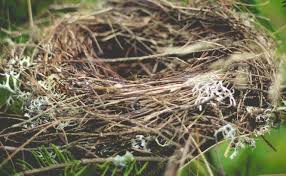
There’s something beautiful about all the pine needles standing higgledy-piggledy around the softly curved rim. It might look a bit ‘not-neat’, but not so long ago it was safe home for a family of baby birds. Whether it’s birds or people, home matters.
There’s something nest-like about home. Maybe it’s the curve. Even though the buildings we live in are generally angular, we like to think of home as somewhere comfortable, with cushions and sofas, sprawling bean bags and beds with soft pillows. Whether we live in a stand-alone house or an apartment block, it’s such a satisfying feeling to open the front door and close it behind you. You’re home!
It’s not quite the same if you live in a share-house. Most young Australians grow up with an expectation of home ownership, so a bedroom in a share house is looked upon as one step on the way. The trouble is we get older and there comes a time when a much loved home may become too big, and often too lonely, and the future lies in a retirement village or a bedroom in a nursing home. As an elderly woman said recently: “I might live in it but don’t ever call it my home”.

On a 2008 trip to the UK I spent a day in East-Coker, a picture-postcard village in Somerset, doing a bit of family research. Along with thatched cottages, quiet laneways and a village pub I photographed these alms-houses and the accompanying billboard.
There’s nothing new about plagues, and I have a link to this 1645 plague outbreak. In 1640 Archdeacon Helyar began building this row of alms-houses for the poor of East Coker. Well before they were finished seventy villagers died of the plague and ever since then the alms-houses have been seen as a practical remembrance of that outbreak. In 1840, two hundred years later, my great-great- grandfather Elias Helyar and his family left Somerset in 1840 and settled in Melbourne.
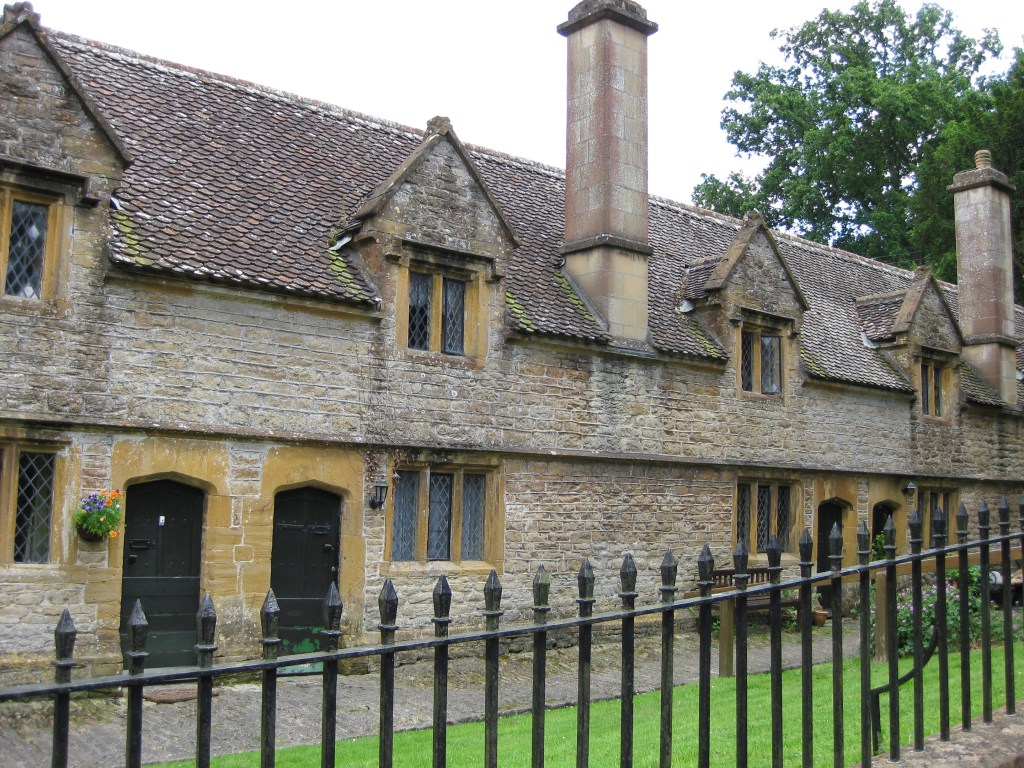
Elias’ link with this earlier Helyar is tenuous but family tradition has always made a connection. I like to think that my (maybe) clergyman ancestor was not only living out Jesus’ teaching to feed the hungry and house the homeless, but was ahead of his time in providing good homes for those 11 women and 1 man, and all who followed them. Those alms-houses are still lived in.
There will be an after for this modern plague and how that plays out will be in the hands of women and men a lot younger than me. If I could be an influencer I would suggest affordable housing, with space for children’s play and a garden, the kind of house that becomes a home.
Judith Scully
 Words From The Edge