
As a young adult I lived in areas of Australia that geographically are defined as desert. The memory of that time colours my understanding of the words that every year lead us into the first Sunday of Lent: “The Spirit drove Jesus out unto the wilderness and he remained there forty days . . .”

Moses, a desert dweller in a place we now call Saudi Arabia, would have been at home in the interior of our country, though I’m not sure how successful he would have been herding sheep there. You’re probably familiar with that famous bit in the Book of Exodus where a voice says to Moses, ‘Take off your sandals, for the place where you are standing is holy ground’. Overcome by the wondrous sight of a bush burning but not burning, of a voice that was probably God, but then again might have been an illusion, he did as he was told. So Moses was faced with the mystery that is God at the same time as he hopped unshod from foot to foot. God does have a sense of humour.
It’s hard to imagine desert country, which looks so barren, so disturbingly other, can be holy ground. Mostly we assume the ground we stand on is holy if life is easy and exciting, things panning out the way we plan them, those times when the pesky questions and fears that challenge our complacency are tucked away out of sight and feeling.
Like Moses, Jesus spent time in the desert. And also like Moses, he was confronted by all kinds of fears during his time there. He was facing a life-changing time in his life, leaving behind the safe and settled life of a village where he known as a carpenter. Decisions, even the ones we know are right, never come easy, practicalities get in the way.
How would he support himself?
What would happen to his mother?
If he went against accepted religious expectations would it put him in danger, or would God protect him?
Or, if his mission was a wonderful success, would he get caught up in the trappings of power?
Would the simple beginnings get tangled up in property and bureaucracy?
(Is that what has happened to the Church over the last two millennium?)
Fears morph into temptation. The Gospel writer embroidered Jesus’ natural fears with images of angels as well as devils, with great heights and wonderful visions of the future. Like all of us, Jesus was tempted by the security that comes with a minimum of risk. We flippantly say ‘No pain, no gain’ as we choose the pain we are most comfortable with. We acknowledge our materialistic lifestyle as we put more goodies on to our credit cards.
The desert is religious shorthand for those mysterious inner places that we keep hidden behind the edges of the secure and structured world in which we live. The prophet Hosea experienced his desert something like this: “I will lead you into the desert, and there I will speak to your heart” (Hosea 2:14). On the wall of the Our Lady of the Desert church in New Mexico there is a saying that paraphrases those words. “The desert will lead you to your heart where I will speak.”
The early Australian explorers entered the desert lands at their own peril, fearful of what lay there. Maybe that is the whole point of Lent: to move into the desert places in our lives – and find Life.
Judith Scully

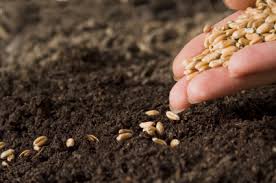 “We plant seeds that will one day grow, we water seeds that are already planted. We are laying foundations that will need development and providing yeast that will produce effects far beyond our present capabilities.”
 Words From The Edge